
The Bridge That Carries Two Interstates: Brent Spence and Cincinnati's Crossroads
I-71 and I-75 share one double-deck bridge over the Ohio River, and its replacement is the region's defining project. Plus: the daily logic of the 275 loop.
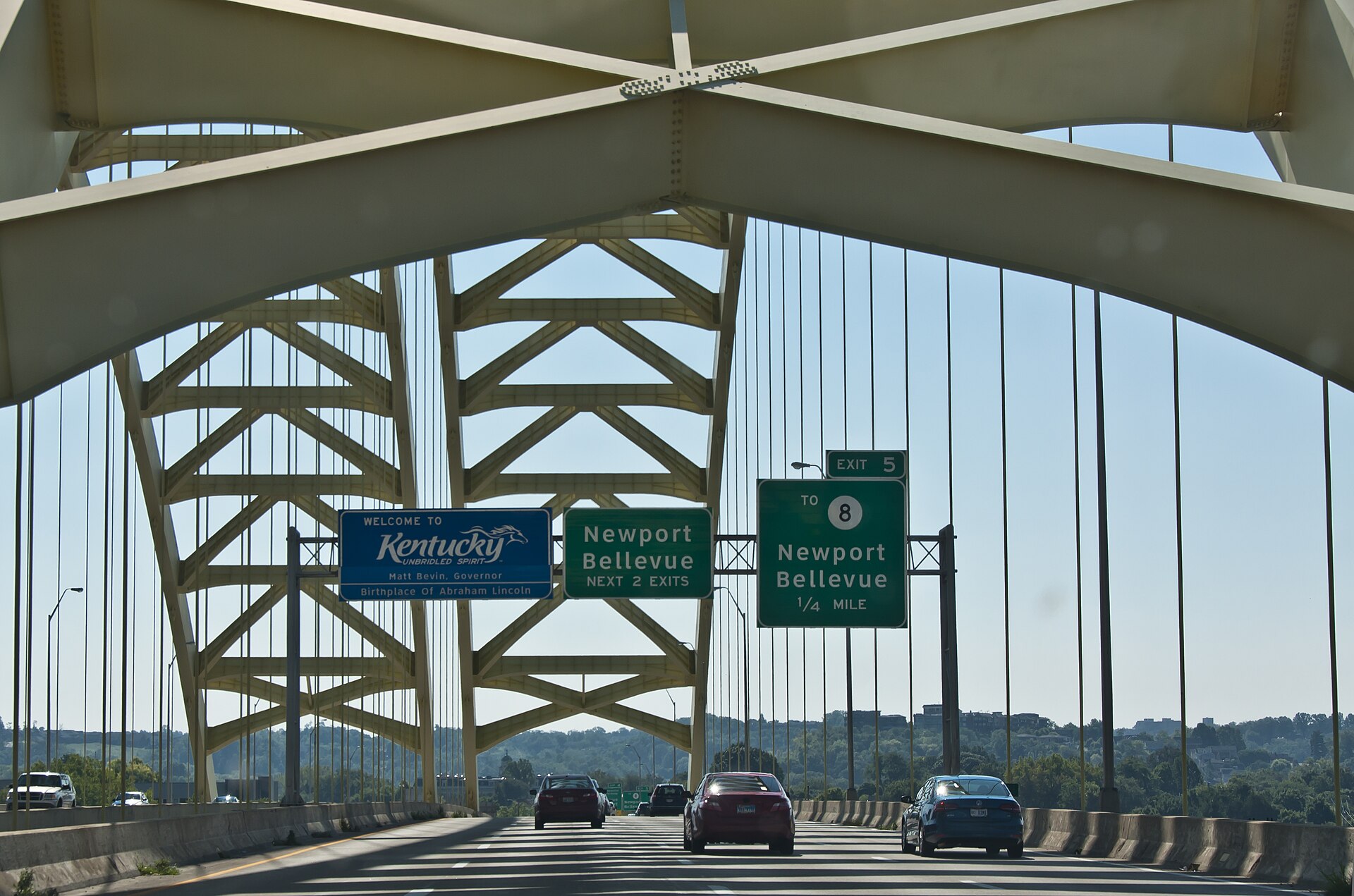
Every region has a chokepoint with a name. Cincinnati's is the Brent Spence Bridge — the double-deck truss that has carried Interstates 71 and 75 together over the Ohio River since 1963, handling roughly double its designed traffic and serving as the freight spine between the Midwest and the South.
The bridge's replacement — the Brent Spence Bridge Corridor project, a multi-billion-dollar Ohio-Kentucky program building a new companion bridge beside the existing one and rebuilding the approaches on both banks — is the region's defining infrastructure story of the decade. Construction phases shape downtown Cincinnati's western edge and Covington's, and the project's progress is tracked through the joint project office's public updates.
Around the bridge, the region's system is a wheel: I-275, one of the longest beltways in America at 84 miles across three states, rings the metro; I-74 runs northwest toward Indianapolis; the Norwood Lateral and Cross County Highway stitch the northern suburbs; and the river's other bridges — Roebling, Taylor-Southgate, Clay Wade Bailey, the Big Mac — each carry their own downtown flows.
Daily pain concentrates predictably: the I-75 corridor through the Mill Creek valley and the Lockland split, the I-71 commute from the northeast suburbs, and the cut-in-the-hill on I-71/75 in Kentucky that has tested truck brakes and patience for sixty years.
November adds the commuter's burdens: full darkness by the evening rush, holiday traffic building, and the season's first slick-bridge mornings on the river crossings.
Cincinnati's advice to itself is old: know your bridge, know your backup bridge, and never, ever trust the Friday before Thanksgiving on I-75.